
Relay rush
Genre: arcade, adventure, puzzle, 2D, Top-Down
Team size: Solo project
Timeline: 1 month
Released: June 2026
Platforms: Web browser
My role: Game designer, Level designer, Programmer, Pixel artist, Audio designer
Tools: Godot, Libresprite, Ableton live, Microsoft word, Microsoft Excel, Photoshop
I wanted to make a game that takes positioning mechanics of “cross the road” games and mixes it with “tower defense” games and still be fun to play and accesible.
You can play the game on browser here!
Responsibilities
- Designing the game mechanics
- Designing levels
- Writing & maintaining GDD
- Programming the game
- Creating the art assets, audio & soundtracks
- Creating UI
Grid based movement
Grid movement forces players to commit to decisions, making every tile a tactical choice instead of allowing continuous dodging. This design choice made me realize that limitations can often inspire creativity. I implemented movement cooldowns that vary depending on the package the player is carrying and the type of tile they are standing on.
The first challenge while developing this mechanic was to determine which tiles are passable since I didn’t use a physics based collision as it was a grid movement that snaps the character to the destination point.
Fortunately Godot tilemaps has a built-in feature that allows for custom attributes addition to each tile. I named each passable tile (e.g. normal, mud etc.) and used a function that returns the type of the tile the player intends to move toward to. If it’s one of the passable ones then the player can move otherwise it will block the movement.
Resources
At first I wanted to have 3 resources that players watch for: health, energy and time. After iterating on the idea and playtesting the game I realized I can add continuous discharge to energy instead of having two different parameters, making it easier for the players to keep track of their resources.
Enemies
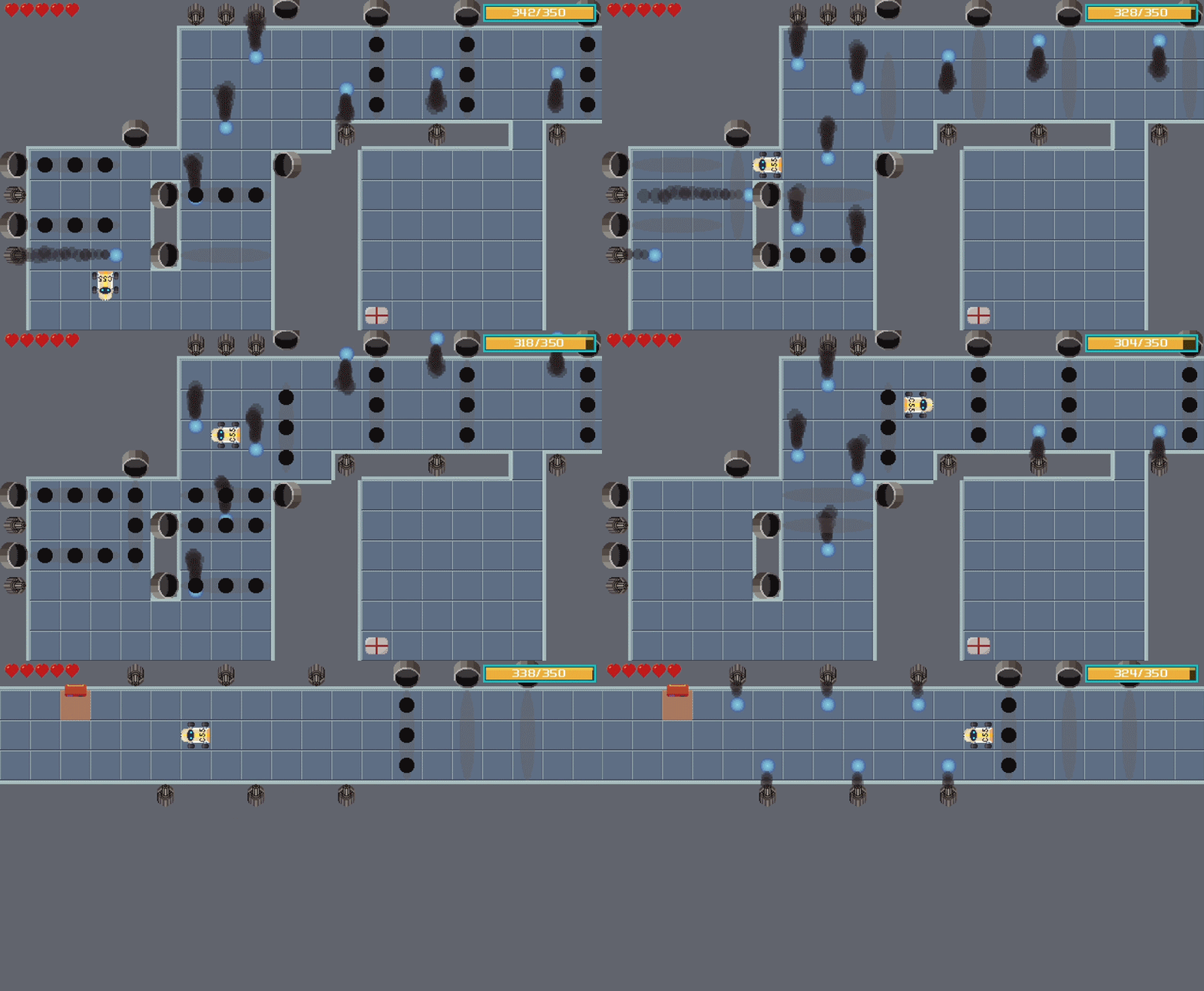
I designed 4 different enemies for this game, but halfway through I realized that I underestimated the amount of time play testing and iteration requires for a puzzle game. I ended up choosing 2 of them (turrets and mortars) and ditching the other two (drones and laser turrets). Turret GDD as an example: Turret GDD
Power ups & charging stations
To make the game easier and more fair to everyone. I added powerups that would each give you different benefits. Same as enemies I had to cut down all of the powerup except the health powerup
Packages
To increase replayability and add a little challenge to the game. Each time you pass a level you need to deliver a different package in the same level. Needless to say I had to reduce the amount of packages in here as well.
Tiles
Tiles play an essential role into designing the level in this game. They don’t just act as decoration but they have gameplay mechanics implemented within them. Each tile determines how much energy you will spend when standing on it.
Narratives
Solaris Imperium, once a thriving nation and one of the greatest economic powers, caught in a mysterious situation, unknown forces jamming long-range signals, hacking and controlling defense turrets and drones and turning them against the people, transports are shot down and the only thing that works is something people thought is no longer needed, a courier on foot.
Concepting & ideation
As a solo dev in Relay rush, I started with concepting and idea iteration, first the game was about a hero in medieval high fantasy that searches dungeons for loots while dodging goblins throwing rocks at them, but eventually, I changed the theme to sci-fi and created C-55. after some iteration I created some sketch of the gameplay and maps then using Godot, I created prototypes to validate my assumptions.
Once the concept was validated and I settled the technical and artistic aspects of the game, I created the first draft of GDD, My workflow consists of creating multiple modular documents for each section of the game rather than writing everything into a single document.
After writing GDD, I created a project schedule using trello and excel, writing down everything that needed to be done for each level with the respect to priority and dependencies
Key Learnings
- Designing mechanics is easier than balancing them.
- Playtesting revealed that fewer, well-polished mechanics created a stronger experience than many unfinished ones.
- Early production estimates should allocate significantly more time for iteration.